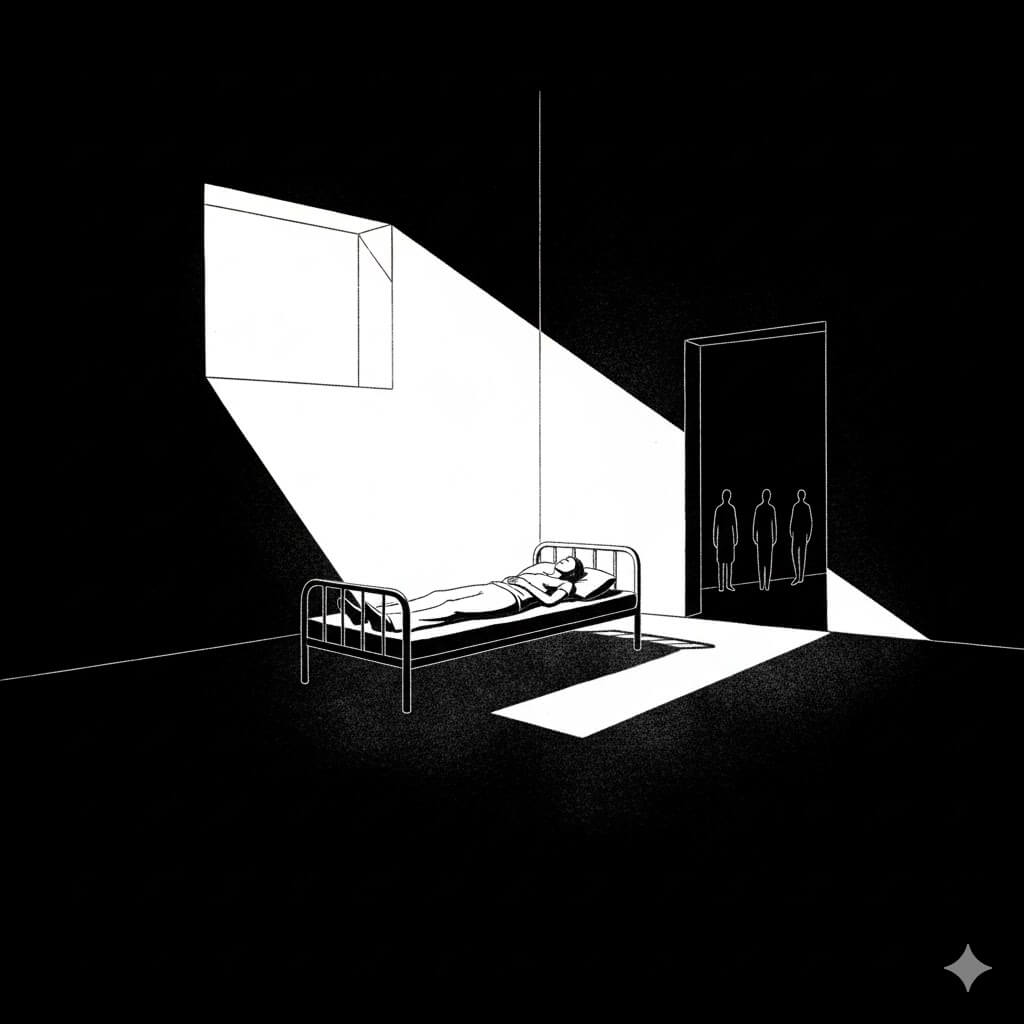
I read "The Death of Ivan Ilych" by Tolstoy during one of those sleepless nights with the baby. Actually listened to the book, since I put the audio on.
It's not a long book. Not complex either. But it's brutal in a way few books manage to be - because it's a punch in the face to ourselves, to our real life, to our daily choices.
`` Ivan's "Instagrammable" life
Ivan Ilych was an ordinary guy. A judge, successful, respected. Did everything right: studied, worked, got married, had kids, climbed the career ladder, bought a beautiful house, decorated it with good taste.
He always chose the cleanest path, the least conflicting, the least risky. Lived by social conventions. Status, appearances, money - these were the things that mattered.
At work, he reduced complex cases full of human nuances to papers, stamps, forms. Got rid of what was unpleasant or improper. Everything running on autopilot, without depth, without real connection.
Sound familiar?
`` The accident
One day, Ivan slips while hanging a curtain in his new house. A silly bump. Starts feeling a pain in his side. Goes to the doctor. The pain doesn't go away. Gets worse.
And that's when the book's real terror begins.
It's not the disease itself that's scary. It's realizing, lying in that bed, that his whole life was... empty. That he spent decades doing what he "had to do", seeking what "was expected", living for appearances.
And now, facing death, none of that matters.
The trophies, the position, the well-decorated house, the respect of colleagues - it all seems worthless when you're really dying.
`` The collective lie
The worst part isn't even the physical pain. It's the loneliness.
Everyone around him lies. The doctors lie about the severity. His wife lies pretending it's just a phase. Friends lie saying he'll get better soon.
No one has the courage to look death in the face and say: "Man, you're dying."
Society as a whole lives this collective lie - avoiding talking about death, about finitude, about what really matters. We prefer to talk about work, about achievements, about things we're going to buy.
Ivan realizes this and feels completely alone.
`` The only ones who don't lie
There are two people in the book who don't lie to Ivan.
The first is Gerasim, the servant. A simple peasant who accepts death as part of life. He holds Ivan's aching legs for hours, relieving the suffering. Doesn't pretend. Doesn't avoid the subject. Just present, with real compassion.
The second is Vasya, his youngest son. At the end, when Ivan is dying, he sees the boy crying beside him. And for the first time in a long time, he feels something genuine - pity for his son, love for his wife.
It's only at that moment, when he finally manages to feel true compassion, that Ivan finds peace. He surrenders to death not with fear, but with a strange joy. As if he had finally woken up.
`` Why this is brutal
I finished the book at 5 AM and just stared at the ceiling.
I thought about my routine. About the automatic work. About the bills I need to pay. About the things I think are important but maybe aren't. About how much I live on autopilot, like Ivan.
The book is brutal because it's not about a guy from the 19th century. It's about me. It's about you. It's about everyone who's chasing status, money, appearances, forgetting to really live.
Ivan only realized this when it was already too late.
`` The question that won't shut up
What would be your biggest regret if you died today?
Think seriously. It's not about having worked too little. Nobody on their deathbed says "damn, I should've closed more deals."
It's about not having really lived. Not having given attention to the right people. Not having been present. Not having had the courage to do what really mattered.
Ivan spent his entire life building a perfect facade and only realized it was hollow when everything crumbled.
`` What remains
I'm not saying I read the book and changed everything in my life. I'm still here, with the same bills, the same commitments, the same work.
But the book planted a seed of restlessness that won't go away.
Every time I pick up my phone on autopilot, I remember Ivan. Every time I choose to work instead of being with my son, I remember Ivan. Every time I worry too much about what others will think, I remember Ivan.
The book is a memento mori - reminding you that you will die. But not to depress you. To wake you up.
Because if you're going to die anyway, if none of this will matter in the end, then why the hell are you living like Ivan?
Why are you postponing real life?
The Death of Ivan Ilych is brutal because it's true. And the truth, when it hits head-on, hurts, bruises our ego.
But maybe that's exactly the kind of pain we need to feel to wake up before it's too late.